Important information
This content is provided for informational purposes and does not constitute financial or legal advice. Consult a qualified notaire or property lawyer for any property purchase decision in France.
Every week, I speak with buyers who have spent months scrolling through French property websites, overwhelmed by choice and unsure where to focus. They have seen the €800,000 farmhouses in Provence and the bidding wars in the Dordogne tourist hotspots. By the time they call me, they are exhausted—and often convinced that their dream of owning a French property is simply out of reach.
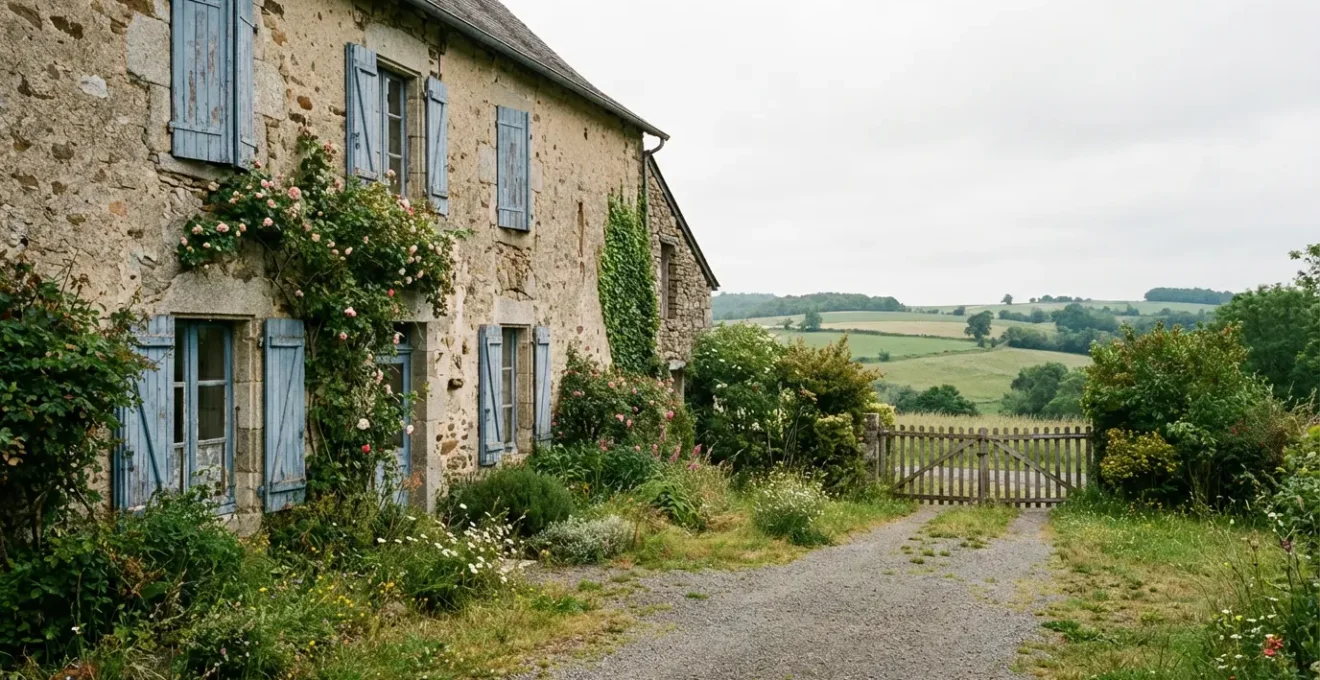
What I tell them usually changes everything: there is a corner of France where your budget genuinely stretches, where you can find a stone farmhouse with land for the price of a garage in Nice—and still have money left for renovation. That place sits across the Limousin and northern Dordogne, and I have spent the past decade helping international buyers discover it.
Limousin and Dordogne in 30 seconds
- Average property prices around €140,000—amongst the lowest in France
- Direct flights from five UK airports to Limoges (under 2 hours)
- Full purchase process typically takes 90-120 days from accepted offer
- Budget 7-10% on top of purchase price for notaire fees and taxes
- This is honest rural France—beautiful, but quiet in winter
What you will find in this guide
What makes Limousin and Dordogne different from crowded French markets
When buyers tell me they want “France,” what they usually picture is a terrace overlooking lavender fields, perhaps a village café where they will become regulars. What they often do not picture is the queue of other buyers competing for the same property, or the asking prices that assume you are a Parisian on a second-home budget.
The Limousin—encompassing the departments of Corrèze, Haute-Vienne, and Creuse—operates on a different rhythm entirely. According to the Kyero market report 2025, this region offers the lowest average property prices in mainland France, sitting at approximately €140,000. That figure is not a typo.
In my years helping buyers find properties between Limoges and Brive-la-Gaillarde, I have noticed a pattern. Clients arrive expecting to compromise—smaller house, less land, further from amenities. Instead, they find themselves choosing between three or four genuine options, all within budget, all with the character they imagined. The negotiating position shifts when you are not competing with fifteen other viewers.
This comparison across popular French regions gives you a sense of what I mean:
| Region | Average property price | Typical buyer competition | Character for budget |
|---|---|---|---|
| Limousin (Corrèze, Creuse) | €139,950 | Low | Excellent |
| Brittany | €220,000 | Moderate | Good |
| Normandy | €195,000 | Moderate-High | Good |
| Provence-Alpes-Côte d’Azur | €385,000 | Very High | Limited at entry level |
The Creuse department remains a particular standout. Average prices there sit under €700 per square metre—a fraction of what you would pay even an hour closer to the coast. If you are genuinely seeking value rather than status, this is where the arithmetic starts to make sense.
Property prices that actually leave budget for renovation
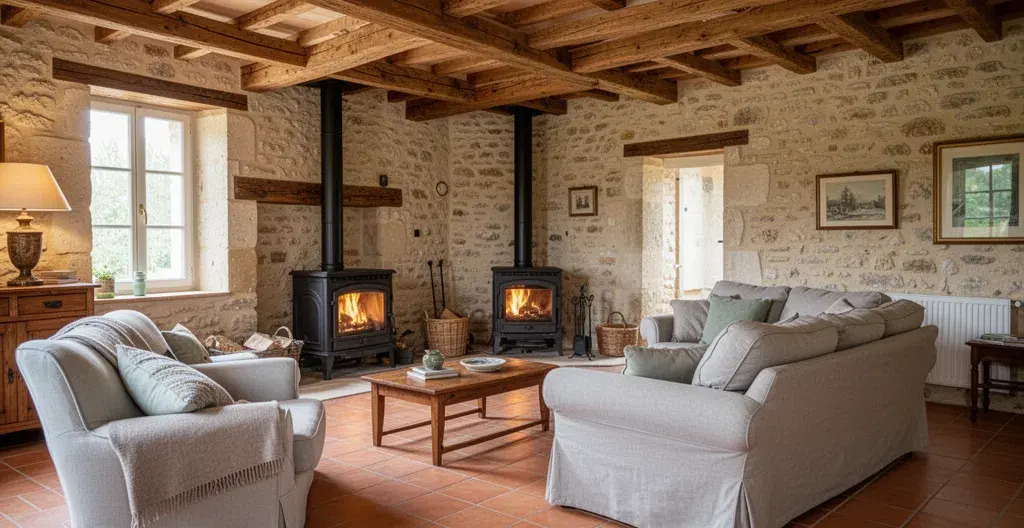
Soyons clairs: cheap property does not mean cheap overall. In my experience helping buyers across the Limousin and North Dordogne, the most common mistake I encounter is underestimating renovation budgets for traditional stone properties. Buyers frequently allocate 30-40% less than ultimately required. This observation is specific to our region and varies depending on property condition and the scope of intended works.
The good news is that starting prices here leave genuine room for renovation in a way that other regions simply do not. To see the current range of properties available, including habitable homes and renovation projects, check this page for real examples of what your budget might find.
Current asking prices in our portfolio (January 2025)
- Village house requiring modernisation: from €49,000
- Habitable stone cottage with garden: from €85,000-€120,000
- Stone farmhouse with outbuildings and land: €150,000-€220,000
- Fully renovated character property: €250,000-€309,000
Prices reflect current listings in Corrèze and northern Dordogne. This list is not exhaustive—contact us for properties matching your specific criteria.
What strikes me about these figures is the gap between “habitable” and “renovated.” A buyer with €180,000 can purchase a solid stone farmhouse at €120,000 and have €60,000 remaining for improvements. In Provence, that same €180,000 might not cover the deposit on a comparable property.
<€700/m²
Average property price per square metre in Creuse, amongst the lowest in France
I always advise clients to budget an additional contingency of 30-50% on top of initial renovation estimates. French artisans are skilled but not always cheap, and older stone properties have a habit of revealing surprises once work begins. The region’s affordability means you can absorb these surprises without the project collapsing financially—a luxury that buyers in premium areas rarely enjoy.
The honest reality of rural French living
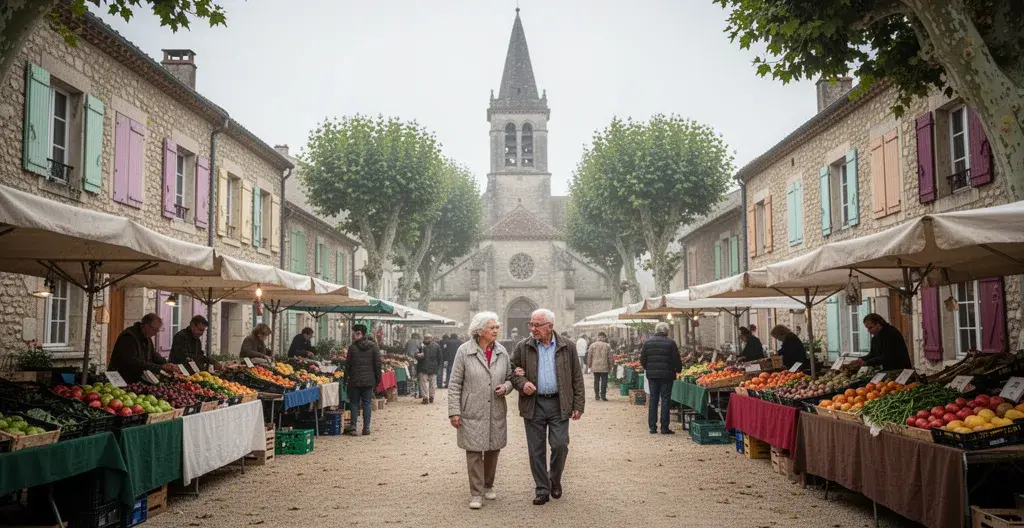
If I only told you the beautiful parts—the rolling green hills, the quiet mornings, the €3 market lunches—I would be doing you a disservice. The reality on the ground is more nuanced, and I would rather you know that before your first winter arrives.
The genuine benefits
- Property prices 60-70% below French coastal regions
- Direct UK flights from five airports to Limoges
- Established English-speaking community for support
- Authentic French village life, not tourist France
The honest challenges
- Winter is quiet—genuinely quiet
- French language becomes essential beyond basics
- Specialist healthcare may require travel to Limoges or Brive
- Rental income potential lower than tourist hotspots
I always advise clients to visit in winter before committing to a purchase. The region is glorious in summer—but you need to experience the quieter months to know if rural France truly suits you. According to current flight connections, Limoges receives direct flights from Bristol, Leeds/Bradford, London Stansted, Manchester, and Nottingham—around 72 arrivals monthly. Getting here is straightforward; the question is whether you want to stay once the tourists leave.
When summer expectations meet winter reality
I accompanied Richard and Sarah—retired teachers from Surrey—on their first viewing trip near Lubersac. They fell in love with a stone farmhouse during a brilliant August week. Everything seemed perfect: the garden, the village bakery, the evening light on the hills.
Their first winter told a different story. The heating system that seemed “characterful” in summer proved inadequate by December. They spent that first January questioning whether they had made a terrible mistake.
What saved them was preparation rather than luck. They had budgeted for contingencies. Within two months, they had installed a proper wood burner and improved the insulation. Four years later, they are permanent residents who genuinely love the winter quiet—but only because they adapted rather than fled.
For those exploring the variety of character properties available in this part of France, our guide to houses for sale in charming Limousin offers a broader perspective on what different budgets can achieve.
Your questions about buying in Limousin and Dordogne
After a decade of helping international buyers navigate French property purchases, certain questions come up in almost every conversation. Here are the answers I find myself giving most often.
Your questions about buying in Limousin and Dordogne
Can British buyers still purchase French property after Brexit?
Yes—there are no restrictions on British nationals purchasing property in France. According to guidance for UK expats, the main change concerns residency: non-EU citizens are now limited to 90 days within any 180-day period without a visa. Property ownership itself remains unrestricted, though it does not grant residency rights.
How much should I budget for notaire fees and taxes?
Budget between 7% and 10% of the purchase price for existing properties. According to France Tax Law guide 2025, the actual notaire fee is only around 1%—the rest comprises stamp duty, registration taxes, and administrative costs. From April 2025, some departments increased their transfer tax rate to 5%, adding roughly €500 per €100,000 of property value.
How long does the buying process take?
Expect 90-120 days from accepted offer to final signing. The typical sequence runs: offer accepted, then compromis de vente (preliminary contract) signed within a week, followed by a mandatory 10-day cooling-off period. Your notaire then conducts searches and arranges surveys over 45-60 days, with final signing (acte de vente) completing the process. Delays happen—usually when searches reveal complications—so build flexibility into your timeline.
What about energy performance ratings?
All French properties must have an energy performance certificate (DPE). Properties rated G can no longer be rented out as of 2025, with F-rated homes facing the same restriction from 2028. For buyers planning to live in the property themselves, this matters less immediately—but factor potential insulation costs into renovation budgets if the rating is poor.
For a complete walkthrough of the French buying process, including detailed explanations of each legal stage, see our guide to buying a property.
The next step for your search
Your immediate action plan
- Define your realistic budget including 10% for fees plus 40% renovation contingency
- Book a viewing trip for autumn or winter—not peak summer
- Speak with a notaire or English-speaking property lawyer before making offers
- Check current flight routes and travel times to your shortlisted areas
If you take one thing from this guide, let it be this: the Limousin and northern Dordogne reward those who look beyond the obvious. The properties are here, the prices are genuine, and the lifestyle—for those who embrace it honestly—is everything the brochures promise. The question is whether you are ready to discover it for yourself.
Important considerations before purchasing
- Property prices and market conditions vary and may change from publication date
- Each property purchase requires individual assessment by qualified professionals
- Tax and legal implications depend on your personal circumstances and residency status
- Renovation costs are estimates only and require professional surveys
Before committing to any purchase, consult a French notaire and qualified surveyor (expert immobilier).